Trenching Safety 101: The OSHA 5-4-3-2-1 Rule Every Arizona Homeowner Should Know
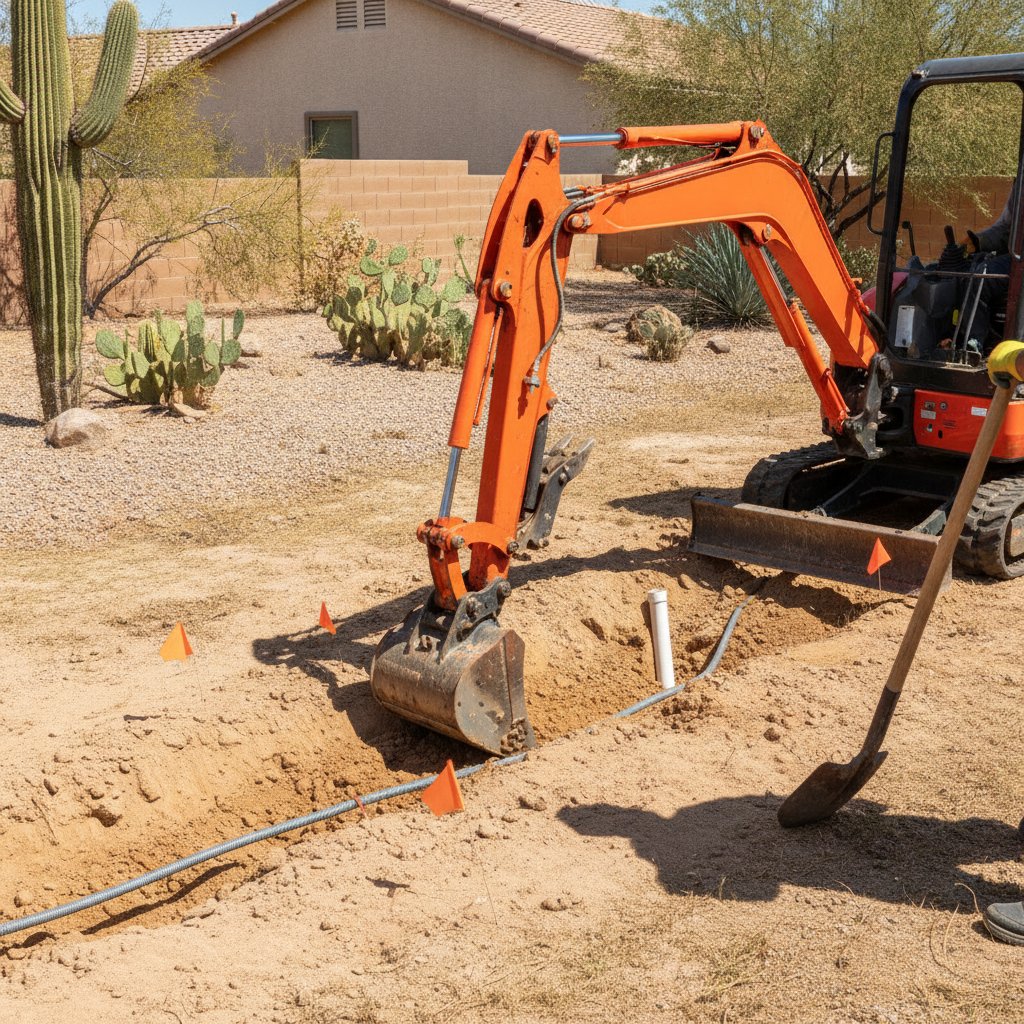
Trenching looks simple from the outside — dig a channel, run a line, backfill. But trenches carry real safety considerations that OSHA takes seriously, and understanding the basics helps homeowners know what a professional crew should actually be doing on their property.
Why trench safety matters
An unsupported trench wall can collapse without warning, and soil is heavier than most people expect. This is exactly why trenching isn't a task to take lightly, whether it's a DIY irrigation line or a professional utility trench.
A simplified look at OSHA's protective-system guidance
OSHA's excavation standard (29 CFR 1926 Subpart P) sets out requirements for trench protection based on depth and soil type. Some contractors informally summarize parts of the standard's logic as a "5-4-3-2-1" shorthand — a simplified way of remembering that deeper trenches need more protection, that soil type changes the calculation, and that certain shallow trenches may not require a protective system at all. This article is a plain-language overview, not a substitute for the actual regulation — the full standard covers protective system types (sloping, shoring, shielding), soil classification, and specific depth thresholds in detail.
What this means in practice
- Depth matters. Deeper trenches carry more collapse risk and generally require more protection.
- Soil type matters. Looser or previously-disturbed soil behaves differently than dense, undisturbed soil — this is part of why Arizona's varied ground (caliche in the Valley, rockier terrain near Tucson, different composition in the Northern Arizona highlands) is relevant to how a trench should be approached.
- Access and egress matter. Workers in deeper trenches need a safe way in and out, not just a way to dig.
- Nobody should enter an unprotected trench beyond the depths where protection is required.
Why this matters even for a "simple" backyard project
Homeowners planning a DIY irrigation or drainage trench sometimes underestimate depth and soil risk on a project that looks small. A trench that seems minor can still carry real risk if it's deeper than it looks or the soil is unstable. When in doubt, that's a good reason to bring in equipment and operators who work with these considerations regularly.
We call for utility locates — every time
Separate from collapse risk, trenching near unmarked utility lines is its own hazard. Confirming utility locations before digging is a standard part of how we operate on every job across Arizona — read more in our Blue Stake 811 guide.
Have a trenching project and want it done with the right precautions in mind? Request a free quote.
Got a Job Everyone Else Turned Down?
Tell us about the project, the access, and where in Arizona it is — we'll give you an honest, upfront quote and get on the schedule.